13 Steps ClickUp Took to $4B Valuation and $200M+ Revenue

What is ClickUp’s Valuation?
ClickUp’s valuation is $4 billion as of 2025. Following its $400 million Series C funding round in October 2021.
What is ClickUp’s Revenue?
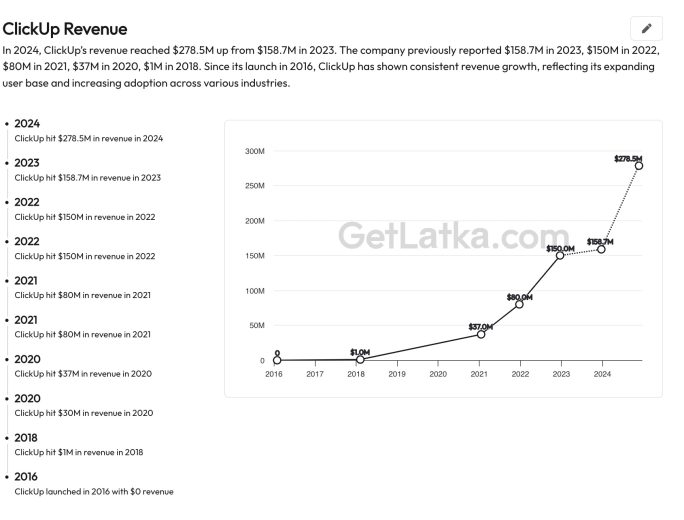
ClickUp revenue reached $278.5M in 2024.
| Year | Revenue |
|---|---|
| 2016 | Launched ($0 revenue) |
| 2018 | $1M |
| 2020 | $37M |
| 2022 | $150M |
| 2024 | $278.5M |
Who is the CEO of ClickUp?
Zeb Evans is the ClickUp CEO and founder. A serial entrepreneur, Evans started ClickUp in 2016 after growing frustrated with the inefficiencies of multiple productivity tools.
Who Are ClickUp’s Competitors?
ClickUp competes with Asana, Trello, Monday.com, and Notion. Unlike its rivals, ClickUp offers an all-in-one platform that combines task management, docs, and automation.
In 2016, the CEO of ClickUp Had Hit His Limit

Running multiple tech ventures, Zeb Evans was drowning in a sea of disconnected productivity tools.
There was one for tasks, another for documents, yet another for automation.
Zeb asked his co-founder, Alex Yurkowski, during a late-night brainstorming session:
“Why are we using five different tools just to get one project done?”
What if there was one platform to manage everything? No more juggling apps. No more wasted time. Just one tool to replace them all.
Fast-forward a few years, and that idea became ClickUp—a productivity powerhouse valued at $4 billion with $278.5 million in annual revenue.
Their Original Idea Was To Create a Safer Craigslist
Before ClickUp, Evans and Yurkowski were involved in various tech projects, including an attempt to create a safer alternative to Craigslist.
However, they consistently encountered inefficiencies due to the fragmented nature of existing productivity tools. This frustration led them to develop a unified solution, which eventually became ClickUp.
1. The #1 Secret To Starting a Bootstrapped Company

In 2017, Zeb Evans and Alex Yurkowski founded ClickUp.
Initially, the company operated without external funding, relying solely on personal resources and a shared vision to create the platform.
Organic Growth Through Having The Product “Take Care of Itself”
Without the backing of venture capital, ClickUp’s early growth was fueled by a commitment to user feedback and continuous improvement.
The founders believed that by focusing on the needs of their users, they could create a product that would naturally attract a larger audience. This approach allowed them to iterate quickly and adapt to the evolving demands of the market.
In an interview, Zeb Evans emphasized the importance of building a product that resonates with users:
“We knew if we built the right product, growth would take care of itself.”
This philosophy underscored their dedication to creating a tool that genuinely addressed user needs.
Mailchimp, one of the largest bootstrapped software companies of all time, had a similar story.
The Turning Point: From Bootstrapped to Funded
ClickUp’s dedication to building a robust and user-friendly platform paid off, as the company began to see significant traction. Recognizing the potential for even greater impact, Evans and Yurkowski decided to seek external funding to accelerate growth.
In 2020, ClickUp secured $35 million in Series A funding, marking a new chapter in the company’s journey.
The story of ClickUp’s bootstrapped beginnings underscores the power of resilience, user-focused development, and the belief that a great product can pave its own path to success.
Key Takeaway: ClickUp’s bootstrapped growth and user-focused innovation fueled its rise, proving that a great product can thrive without early venture capital.
2. How ClickUp’s Freemium Model Turned Free Users Into $278.5M in Revenue
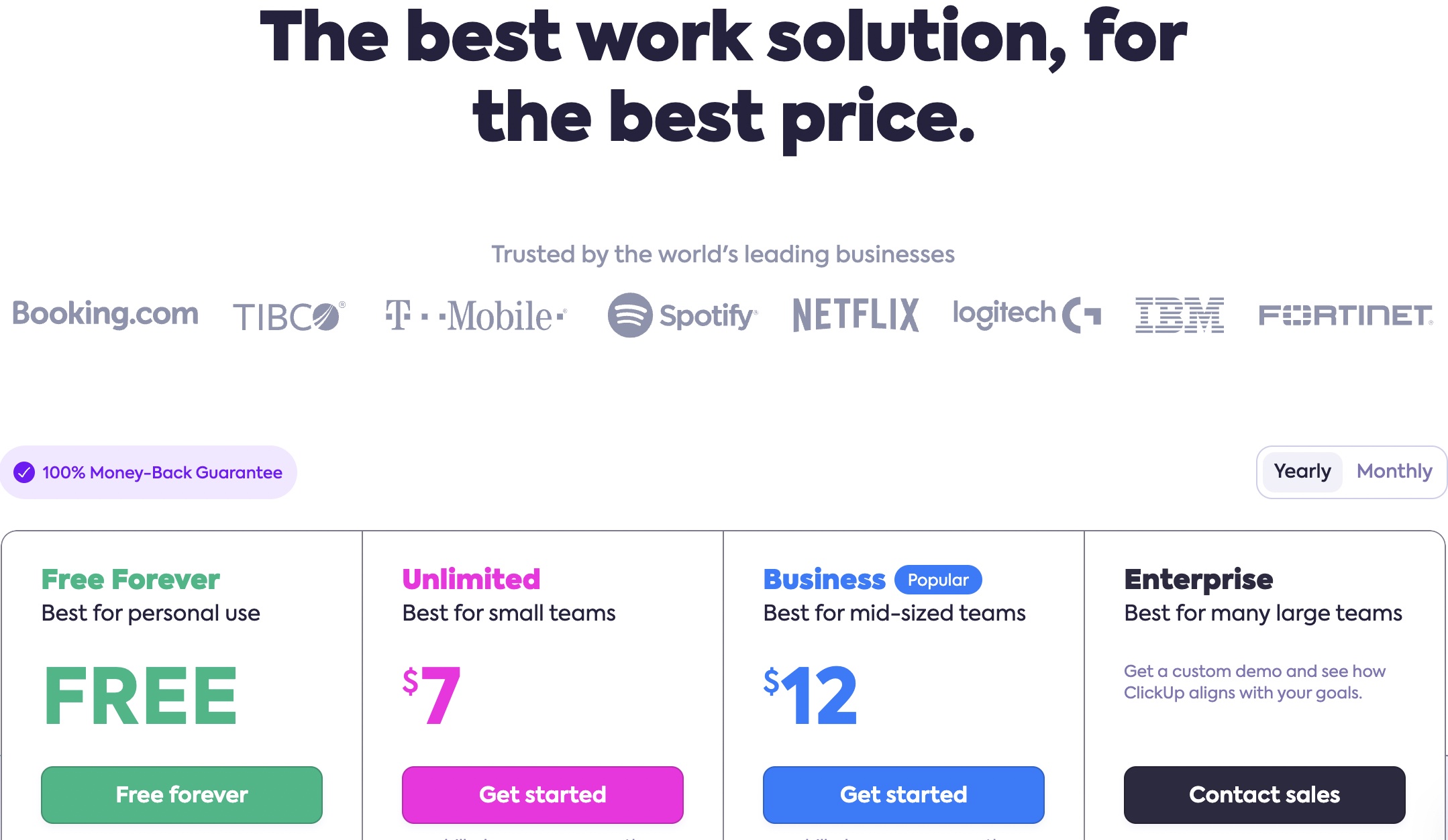
In a crowded SaaS market where paid subscriptions are king, the company took a bold risk—giving away more than ClickUp competitors did in their premium plans.
Instead of locking advanced features behind paywalls, ClickUp’s freemium model lets users experience its full power for free, betting that the product would sell itself. And it worked.
Today, 60% of ClickUp’s paying customers started on the free plan, helping the company skyrocket to $278.5M in revenue by 2024.
But this wasn’t just a lucky break—it was a carefully engineered growth strategy designed to turn free users into lifelong customers.
More Than Just Free—Why ClickUp’s Freemium Model Stood Out
Many SaaS companies offer a free plan, but ClickUp took it to an extreme. Unlike Asana or Monday.com, which limit essential features to push users toward paid plans, ClickUp’s free version included unlimited tasks, integrations, docs, and automations—features other platforms charge for.
“We wanted to remove barriers. If users could see the value upfront, they’d stick with us,” says Zeb Evans, ClickUp’s CEO in an interview.
The strategy paid off. ClickUp’s free plan became a viral growth engine, spreading through startups, agencies, and enterprises without heavy ad spend.
60% of ClickUp’s Revenue Started as Free Users
While most SaaS companies struggle with free-to-paid conversion rates (typically around 2-5%), ClickUp converted over 60% of its paying users from the free plan. How?
- Feature Overload: ClickUp didn’t just offer a “lite” version—it let users experience its full ecosystem before asking for payment.
- Frictionless Upgrades: Once users needed more storage, team seats, or enterprise security, the paid plans felt like a natural next step.
- Community-Led Growth: ClickUp’s free users became its biggest evangelists, bringing the platform into their workplaces and teams.
“Our best marketing isn’t paid ads—it’s happy users showing ClickUp to their teams,” says Evans.
Why ClickUp’s Free Plan Was a Competitive Weapon
Competitors like Asana, Monday.com, and Notion kept their best features locked behind paywalls. ClickUp did the opposite—offering enterprise-level features in the free plan, making switching irresistible.
As a result, users abandoned Asana and Trello for ClickUp because they could get more without paying.
And the long game worked—ClickUp revenue soared to $278.5M in 2024, fueled by a model that most SaaS companies feared to try.
Key Takeaway: By providing premium features for free, ClickUp drove viral adoption, converted 60% of free users into paying customers, and turned free users into its biggest source of revenue growth.
3. Why ClickUp Raised $400M & How It’s Fueling Growth
In October 2021, the company secured a $400 million Series C funding round, bringing ClickUp valuation to $4 billion. The investment was led by Andreessen Horowitz and Tiger Global, with contributions from Lightspeed Venture Partners and Meritech Capital Partners.
This was one of the largest funding rounds for a productivity software company, signaling investor confidence in ClickUp’s vision to revolutionize the way people work. But this funding wasn’t just about raising capital—it was about scaling ClickUp into a global powerhouse.
If you want to grow like Clickup, consider using one of these 400 AI Prompts for Business.
Beyond Capital: A Vision for Legendary Growth
For many startups, securing funding is primarily about accelerating expansion, acquiring customers, or increasing advertising spend.
But for ClickUp’s CEO, Zeb Evans, the $400 million round was about something bigger. He had already bootstrapped the company in its early years and proved that ClickUp could scale rapidly without massive external investment.
This funding was about long-term transformation, category domination, and product innovation.
In an interview discussing the funding round, Zeb Evans made it clear that ClickUp wasn’t raising money just to grow—it was raising money to build something legendary.
Expanding Into Global Markets
One of the most significant moves ClickUp made post-funding was global expansion. While the company had already gained traction in the U.S., Evans and his team saw massive potential in international markets.
Europe, in particular, became a key focus, with ClickUp setting up a new headquarters in Dublin, Ireland, to drive operations across the continent.
The expansion wasn’t just about opening offices—it involved hiring regional teams, localizing the product, and making ClickUp more accessible to businesses in France, Germany, Spain, and beyond.
Investing in AI & Product Innovation
The funding also allowed ClickUp to double down on AI-powered automation, something Evans had long seen as the future of productivity software.
The company allocated significant resources to developing AI-driven features that could automate repetitive tasks, improve workflows, and optimize team efficiency.
With more businesses looking for ways to integrate artificial intelligence into their operations, ClickUp positioned itself as a pioneer in this space.
Instead of simply improving what already existed, ClickUp focused on redefining productivity tools through AI.
The goal was to create an intuitive system that could learn from user behaviors, suggest workflow optimizations, and eventually automate tasks so teams could focus on high-impact work. Evans believed that AI would be the key to ClickUp’s next phase of innovation.
Key Takeaway: ClickUp’s $400 million funding round wasn’t just about growth—it was about transforming the company into a dominant force in the productivity software market.
4. The ClickUp Marketing Playbook: How They Reached 10M+ Users
In the fiercely competitive landscape of project management tools, ClickUp emerged as a dominant player, amassing over 10 million users by 2024.
This remarkable growth was not a stroke of luck but the result of a meticulously crafted marketing strategy that leveraged SEO, content marketing, and bold advertising campaigns.
Mastering SEO and Content Marketing
From its inception, ClickUp prioritized organic growth. The company adopted a robust content marketing strategy, publishing insightful articles daily on topics ranging from project management best practices to remote work tips.
This consistent output helped ClickUp rank for over 60,000 keywords, capturing top positions for high-intent searches like “free project management software.”
By creating valuable content tailored to their target audience, ClickUp not only attracted potential users but also established itself as an authority in the productivity space.
This approach drove substantial organic traffic to their website, contributing significantly to user acquisition.
Leveraging YouTube and Video Content
Understanding the power of video in engaging audiences, ClickUp invested heavily in YouTube as a marketing channel.
The company produced a variety of content, including tutorials, feature highlights, and customer testimonials. These videos served dual purposes: educating existing users and attracting new ones.
By addressing common pain points and demonstrating how ClickUp could solve them, the videos became a valuable resource for users at different stages of the customer journey.
Bold Advertising and Competitive Positioning
ClickUp didn’t shy away from directly comparing itself to competitors like Asana and Trello.
Through bold advertising campaigns, including humorous videos and targeted ads, ClickUp highlighted its superior features and value proposition. This approach resonated with users seeking a comprehensive solution, setting ClickUp apart in a crowded market.
This assertive marketing tactic not only increased brand awareness but also positioned ClickUp as a leader in the productivity software industry.
Referral Programs and Community Building
Recognizing the power of word-of-mouth, ClickUp implemented a strong referral program. Satisfied users were incentivized to share the platform with others, creating a viral loop that fueled growth.
Additionally, ClickUp fostered a vibrant community through forums and social media groups, encouraging user interaction and feedback.
Key Takeaway: By telling their story boldly and leveraging multiple channels effectively, ClickUp set a benchmark for growth in the SaaS industry.
5. ClickUp vs. Asana: Why 1M+ Users Switched—and Never Looked Back
When Zeb Evans launched ClickUp, he wasn’t just trying to build another project management tool—he wanted to replace every other tool teams relied on.
At the time, Asana dominated the market, along with Trello and Monday.com. But Evans saw a gap: these platforms lacked flexibility, locked features behind expensive paywalls, and forced users to juggle multiple apps to manage their workflows.
Fast forward to 2024, and over 1 million Asana users have switched to ClickUp, helping fuel its explosive $278.5M in annual revenue. But why are so many teams making the leap?
More Features for Less—Why ClickUp’s All-in-One Approach Wins
For years, businesses relied on Asana for task management. But for advanced features like time tracking, automation, or goal setting, users had to pay more—or integrate multiple tools.
ClickUp flipped the script by bundling everything into one platform, at a fraction of the cost.
ClickUp’s free plan alone includes:
- Unlimited tasks and projects (Asana caps free users at 15 seats)
- Built-in time tracking (Asana requires third-party integrations)
- Custom dashboards for analytics (Asana’s are locked behind a $24.99/month plan)
“Why force users to pay for basic productivity? We believe powerful tools should be accessible to everyone,” Evans explained in an interview.
The results speak for themselves: by offering more functionality upfront, ClickUp’s free users convert to paid plans 60% faster than Asana’s.
Why Teams Leave Asana for ClickUp’s Flexible Workflows
While Asana offers a structured approach to project management, ClickUp gives teams full control over their workflows.
In ClickUp, users can customize task statuses, fields, dashboards, and automation rules—something Asana only allows in its highest-tier plans.
For businesses with complex workflows, this level of flexibility is a game-changer. One marketing agency that switched from Asana to ClickUp cut their project turnaround time by 30% simply by using ClickUp’s customizable task automation.
The Price War: ClickUp Delivers More Value at a Lower Cost
Price has been one of the biggest reasons users switch from Asana to ClickUp. Asana’s business plan starts at $24.99 per user per month, while ClickUp’s equivalent plan starts at just $12.99—with more features included.
For large teams, that difference adds up to thousands of dollars in savings per year.
Asana users frustrated by rising costs find ClickUp’s transparent pricing and feature-rich plans a refreshing alternative—driving a massive migration to the platform.
Why ClickUp’s Growth Strategy Beats Asana’s
Unlike Asana, which relies heavily on paid advertising, ClickUp’s growth has been fueled by word-of-mouth and product-led marketing. Users discover ClickUp through SEO-driven content, YouTube videos, and direct competitor comparisons.
Evans made it clear that ClickUp’s marketing strategy is about bold storytelling and showing why ClickUp is the better choice.
By publishing side-by-side comparisons of ClickUp vs. Asana, the company actively targets frustrated Asana users, convincing them to make the switch. This aggressive approach has paid off—ClickUp’s market share has tripled in the last three years, directly taking users from Asana and Trello.
Key Takeaway: By offering more for less and telling its story boldly, ClickUp continues to challenge Asana’s dominance in the productivity space.
6. How ClickUp’s AI Is Saving Teams 20+ Hours a Week—And Reshaping the Future of Work
For years, productivity software has been about managing tasks, not eliminating them. But ClickUp’s CEO, Zeb Evans, saw a different future—one where AI could handle the busy work, allowing teams to focus on what really matters.
While most companies use AI as a buzzword, ClickUp is betting on it as a game-changer for the future of work. In 2024, the company rolled out ClickUp Brain, an AI-powered assistant designed to automate workflows, generate insights, and optimize team efficiency like never before.
“AI won’t replace jobs, but it will eliminate busy work,” Evans said in an interview, addressing concerns about automation.
And for thousands of teams switching to ClickUp, AI isn’t just a gimmick—it’s already saving them hours of manual work every week.
The AI Assistant That’s Changing How Teams Work
When ClickUp launched ClickUp Brain, the goal wasn’t just to add another AI chatbot—it was to build an intelligent system that could actually manage work.
ClickUp Brain doesn’t just answer questions; it connects tasks, documents, and team knowledge in real-time. If a team member asks, “What are our top priorities this week?” ClickUp Brain analyzes projects and instantly provides an answer—without the need for endless email threads or meetings.
This level of AI-powered automation is what sets ClickUp apart from competitors like Asana and Monday.com, which still rely on manual inputs and rigid workflows.
Eliminating Busy Work with AI-Powered Task Automation
For most teams, half of their workday is spent on repetitive, low-value tasks—status updates, formatting reports, and sorting through endless notifications. ClickUp’s AI is designed to automate these tasks instantly, reducing time spent on administrative work.
Instead of manually assigning tasks or following up with team members, ClickUp Brain:
- Auto-generates task lists based on project goals
- Writes meeting summaries and key takeaways automatically
- Prioritizes work based on deadlines and dependencies
This automation-first approach is already saving ClickUp users up to 20 hours per week, allowing teams to focus on strategy, creativity, and execution instead of checking off boxes.
“AI is here to do the work nobody wants to do—so people can focus on what really drives impact,” Evans says.
How ClickUp’s AI Optimizes Productivity
Beyond automation, ClickUp’s AI is designed to think like a strategist. By analyzing team workflows, project deadlines, and task dependencies, it identifies bottlenecks and suggests optimizations in real time.
For example, if a team constantly misses deadlines, ClickUp’s AI might recommend:
- Adjusting deadlines based on past project performance
- Reallocating tasks to underutilized team members
- Suggesting workflow changes to improve efficiency
These AI-driven insights help teams make better decisions—without spending hours analyzing data manually.
Key Takeaway: ClickUp’s AI-first approach is revolutionizing productivity by eliminating repetitive tasks, optimizing workflows, and turning raw data into actionable insights. With ClickUp Brain, the company isn’t just following the AI trend—it’s leading the charge in redefining how work gets done.
7. How ClickUp Became the #1 Productivity Tool for Startups & Enterprises
ClickUp’s adaptability quickly caught the attention of a diverse range of organizations. Startups were drawn to its customizable workflows and comprehensive features that supported rapid growth and innovation.
Simultaneously, 80% of Fortune 500 companies began integrating ClickUp into their operations, recognizing its capacity to enhance productivity and collaboration on a large scale.
Enterprise-Grade Features: Meeting Rigorous Standards
To serve its expanding enterprise clientele, ClickUp prioritized the development of features that addressed critical business requirements:
- SOC 2 Compliance: Understanding the importance of data security, ClickUp achieved SOC 2 Type 2 compliance, ensuring that its systems are designed to keep sensitive information secure.
- Custom Workflows: Recognizing that no two businesses operate identically, ClickUp offers highly customizable workflows, allowing organizations to tailor the platform to their specific processes and methodologies.
- 24/7 Support: With global operations, ClickUp provides round-the-clock support to address any issues promptly, minimizing downtime and maintaining operational efficiency.
A Platform Built to Scale
From its inception, ClickUp was engineered with scalability in mind. The platform’s modular architecture and flexible design enable it to evolve alongside businesses, accommodating increased complexity and growth without compromising performance.
This scalability has been instrumental in ClickUp’s widespread adoption across various industries and organizational sizes.
Key Takeaway: ClickUp’s commitment to versatility, security, and scalability has solidified its position as a preferred productivity tool for both startups and Fortune 500 companies, fulfilling its founders’ vision of a platform that grows with businesses at every stage.
8. ClickUp’s Product Roadmap: What’s Next?
ClickUp’s product roadmap is a reflection of its dedication to meeting the diverse needs of its users. The company plans to introduce a suite of new features aimed at enhancing functionality and user engagement.
These include advanced AI-powered tools designed to streamline workflows and provide intelligent task automation.
Additionally, ClickUp is expanding its integration ecosystem, allowing seamless connectivity with a broader range of third-party applications, thereby fostering a more cohesive and efficient user experience.
Global Expansion Plans: Bringing ClickUp to the World
Recognizing the growing demand for versatile productivity tools across the globe, ClickUp is embarking on an ambitious international expansion strategy.
This includes establishing data centers in key regions to improve service reliability and compliance, as well as localizing the platform to cater to non-English speaking markets.
By doing so, ClickUp aims to make its platform accessible and valuable to a worldwide audience.
The Potential for an IPO in 2026: A New Chapter
As ClickUp continues its upward trajectory, discussions about taking the company public have gained momentum.
An Initial Public Offering (IPO) in 2026 is on the horizon, marking a significant milestone in the company’s journey. This move would not only validate ClickUp’s market position but also provide the capital necessary to fuel further innovation and expansion.
Zeb Evans on the Future: A Visionary’s Perspective
CEO Zeb Evans has always been vocal about his aspirations for ClickUp. In a recent interview, he stated,
“We’re not stopping until ClickUp is a household name.”
This statement encapsulates the company’s relentless pursuit of excellence and its mission to redefine productivity on a global scale.
Key Takeaway: ClickUp’s strategic roadmap, encompassing innovative features, global expansion, and potential public offering, underscores its commitment to becoming a ubiquitous name in productivity solutions, aligning with its impressive $4 billion valuation.
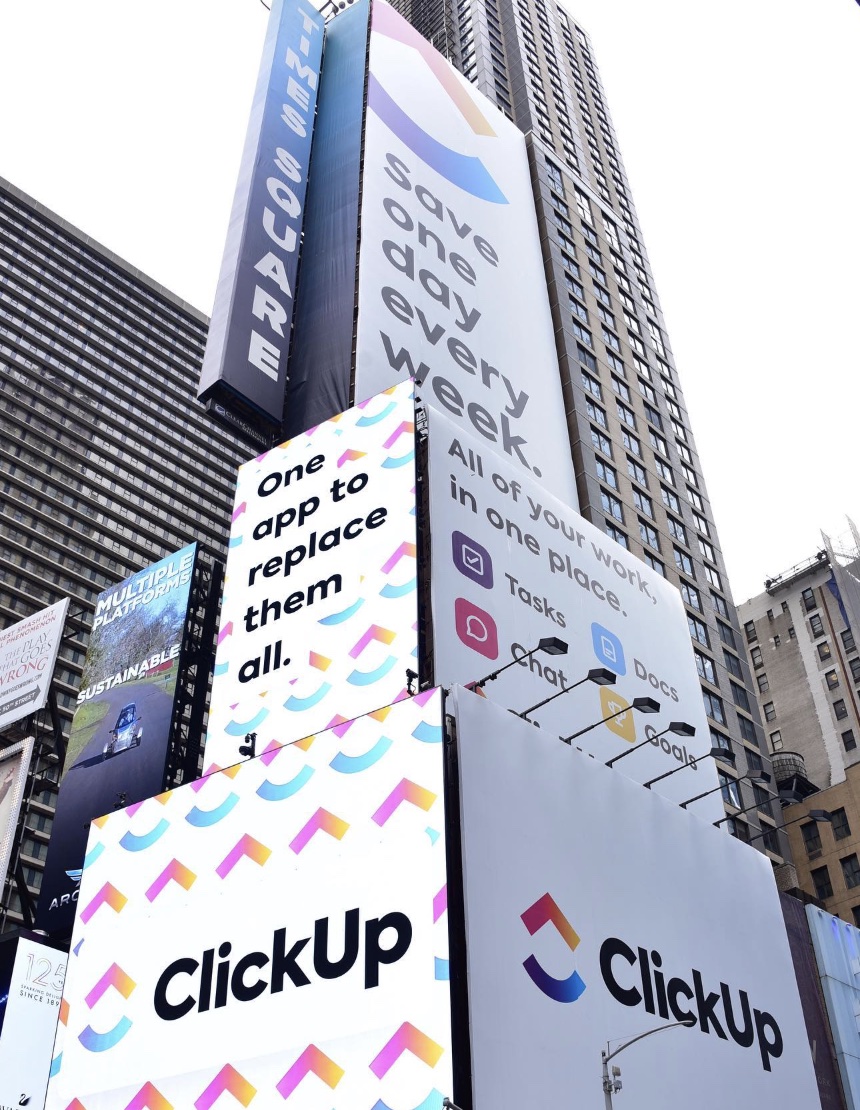
9. How ClickUp’s “One Tool to Replace Them All” Strategy Disrupted the SaaS Market
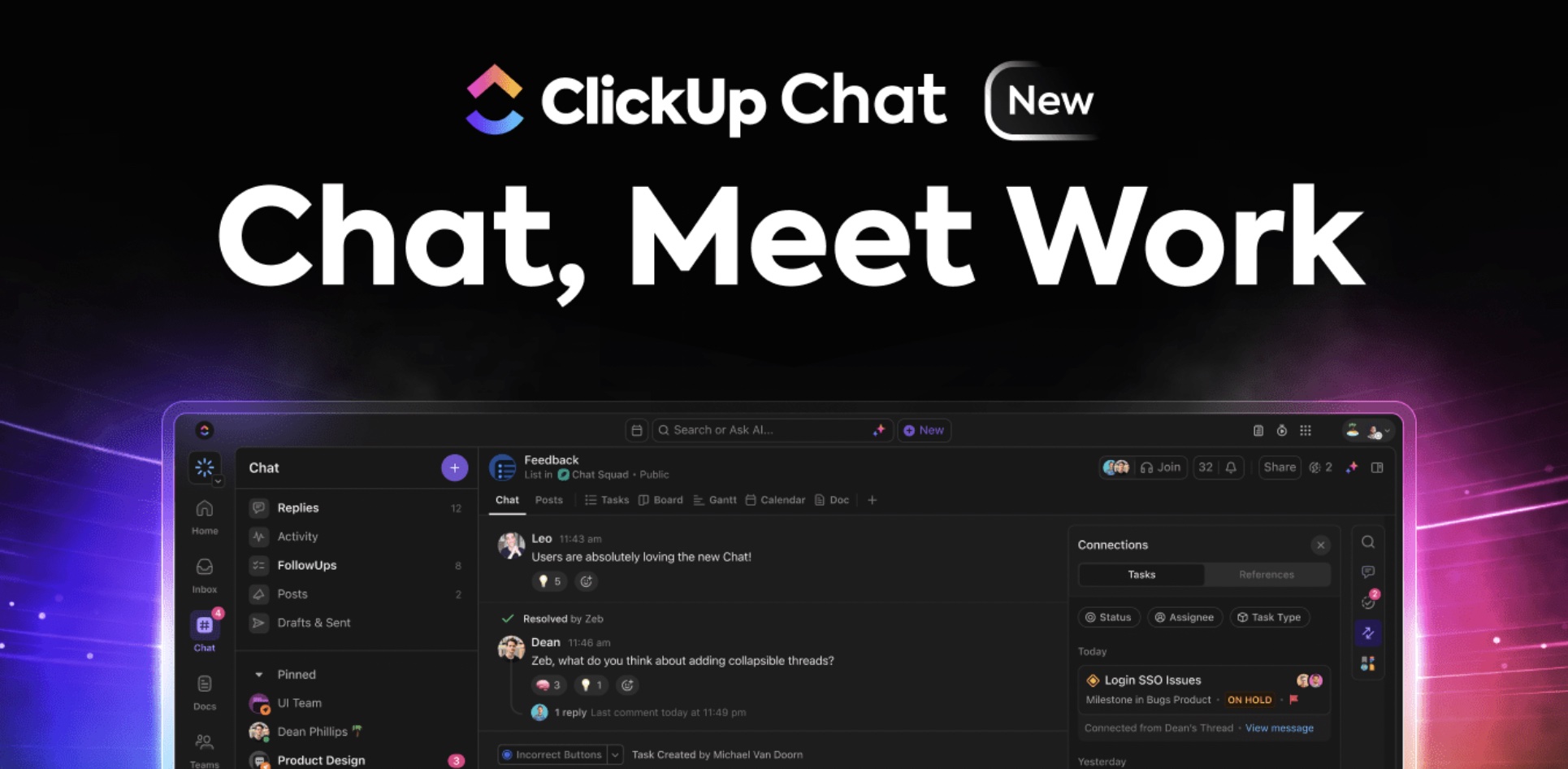
In 2017, Zeb Evans and Alex Yurkowski founded ClickUp with a singular vision: to create a unified platform that could replace the myriad of productivity tools cluttering the workplace. Evans observed,
“The problem we were solving was actually a much bigger problem: There was software overload, particularly in the productivity category.”
The Genesis of ClickUp
Before ClickUp, Evans and Yurkowski were involved in various tech projects, including an attempt to create a safer alternative to Craigslist.
However, they consistently encountered inefficiencies due to the fragmented nature of existing productivity tools. This frustration led them to develop a unified solution, which eventually became ClickUp.
Building free tools to help your customers grow is a great growth hack. Founderpath does this with their Bank Statement Converter.
A Unified Platform: Task Management, Docs, Goals, Whiteboards, and Automation
Unlike competitors that specialize in one function, ClickUp integrates task management, docs, goals, whiteboards, and automation in one platform. This all-in-one approach has been key to its rapid adoption.
Evans remarked, “We want a startup to be able to come with us, and then build their startup into several people, grow to a mid-market business, and then an enterprise – without having to leave the product.”
Streamlined Workflows and Enhanced Productivity
By consolidating multiple tools into a single platform, ClickUp has enabled teams to streamline workflows, reduce context switching, and enhance overall productivity.
Key Takeaway: ClickUp’s “One Tool to Replace Them All” strategy has disrupted the SaaS market by offering a comprehensive solution that adapts to the evolving needs of businesses, fostering growth and efficiency across various industries.
10. The Secret Behind ClickUp’s Lightning-Fast Product Development
In the fast-paced world of software development, speed and adaptability are paramount. ClickUp, the all-in-one productivity platform, has set a remarkable standard by releasing new features every week, consistently outpacing many competitors.
A Culture of Agility and User-Centric Development
At the heart of ClickUp’s rapid development cycle is a commitment to agility and a deep focus on user needs.
The company’s internal philosophy is succinctly captured in their mantra: “Move fast, listen to users, and iterate.” This approach ensures that product enhancements are both swift and aligned with user expectations.
Zeb Evans on Product Development
CEO Zeb Evans emphasizes the company’s dedication to meeting customer needs over following industry trends. He states,
“We build at the speed of customer needs, not industry trends.”
This perspective underscores ClickUp’s commitment to delivering value that directly addresses user requirements.
Key Takeaway: ClickUp’s rapid product development, driven by a user-centric and agile approach, has been instrumental in its ability to consistently meet and exceed user expectations, solidifying its position as a leader in the productivity software market.
11. How ClickUp Expanded Into Enterprise Without Losing Its Startup DNA
In its early years, ClickUp was the go-to tool for startups and small businesses, offering an all-in-one solution that helped teams stay organized and efficient without the need for multiple apps.
However, as the company grew, so did its ambitions. The unique flexibility and power of ClickUp’s platform didn’t just attract small teams—it caught the eye of Fortune 500 companies that saw the value in a scalable, customizable productivity tool.
What started as a solution for small businesses eventually transformed into an enterprise-grade platform, all while maintaining the agile, innovative spirit of a startup.
Seamless Transition to Enterprise Solutions
Initially, ClickUp was designed with startups in mind, offering features tailored for smaller teams looking to optimize their productivity.
However, as the platform gained popularity, larger companies started to take notice. These enterprises needed a tool that could scale, manage complex workflows, and integrate with existing systems—ClickUp could deliver.
To accommodate the unique needs of enterprise clients, ClickUp enhanced its security features, added customization options, and ensured its platform could integrate with the wide array of systems that large organizations rely on.
Features like SOC 2 compliance, advanced reporting, and 24/7 support made ClickUp not only a suitable solution for large teams but also a secure and reliable platform for enterprises.
Despite the shift towards serving large-scale businesses, ClickUp managed to maintain its startup DNA—its ability to move quickly, adapt to user feedback, and innovate at speed.
Evans and his team ensured that ClickUp stayed true to its roots by keeping the platform intuitive, user-friendly, and always evolving based on customer needs.
Zeb Evans on Enterprise Adoption
In reflecting on ClickUp’s growth, Evans explained,
“We built ClickUp for startups, but enterprises saw the value and came to us.”
This quote speaks to the versatility of ClickUp and how its adaptability allowed it to cater to businesses of all sizes.
While many software solutions designed for enterprise clients end up being clunky and difficult to use, ClickUp’s flexible, user-first approach allowed it to scale smoothly without losing its startup culture of speed and innovation.
Key Takeaway: ClickUp’s transition from a startup-focused tool to an enterprise powerhouse has been driven by its ability to scale without losing its core values.
12. How ClickUp Operates at 200% Speed
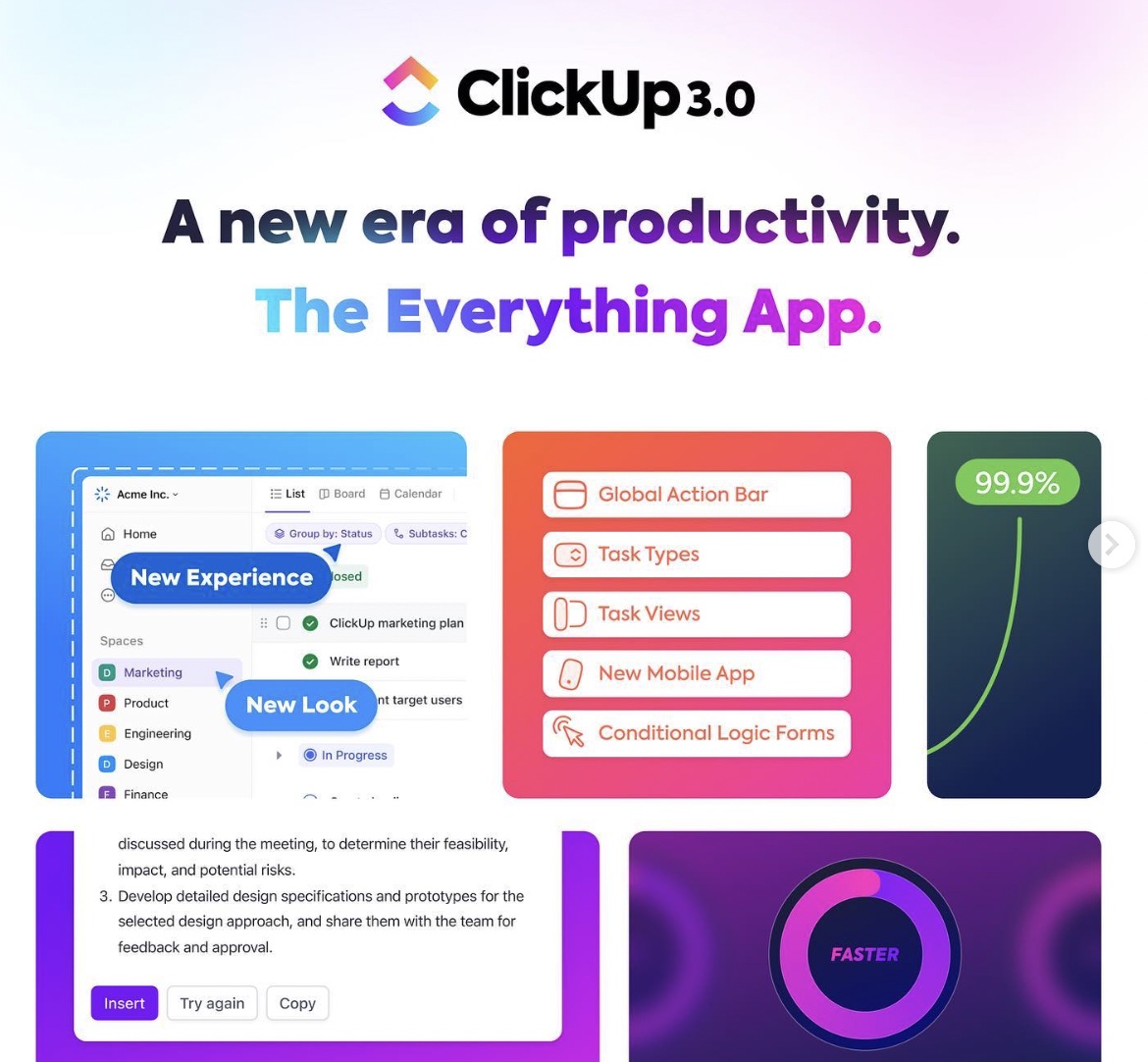
Founded with a commitment to speed and efficiency, the company’s internal motto is simple but powerful: “Normal is broken.”
This belief drives the team to break the mold, operate at maximum velocity, and push the boundaries of what’s possible—constantly.
The Hyper-Productivity Culture at ClickUp
What sets ClickUp apart is not just the software they build, but how they use it themselves.
Rather than offering theoretical solutions, ClickUp is on a mission to walk the talk. Their teams work in hyper-productivity mode, managing projects, collaborating, and tracking their goals all within the platform they’ve created.
It’s a test of their own tool—one that keeps them in sync, efficient, and working at full throttle.
The real magic of ClickUp is that its own team uses ClickUp to break through traditional productivity limits, getting more done in less time. This isn’t a company preaching about efficiency; it’s one living and breathing it every day.
Zeb Evans, CEO of ClickUp, is clear about the company’s approach to product development:
“If we don’t use our own tool better than anyone, how can we expect others to?”
This is more than just talk—it’s a non-negotiable. ClickUp is built to enhance workflow, reduce friction, and maximize team output, and the ClickUp team lives by that philosophy.
Their commitment to hyper-productivity doesn’t just make them a great example for their users—it fuels the constant development of their tool, with new features released every week to keep pace with their own internal needs.
Key Takeaway: ClickUp’s relentless pursuit of speed, efficiency, and constant iteration isn’t just part of its product—it’s part of its culture. It’s this operational agility and focus on continuous improvement that has made ClickUp a leader in productivity software.
13. ClickUp’s Vision for the Future: Replacing Work Software as We Know It
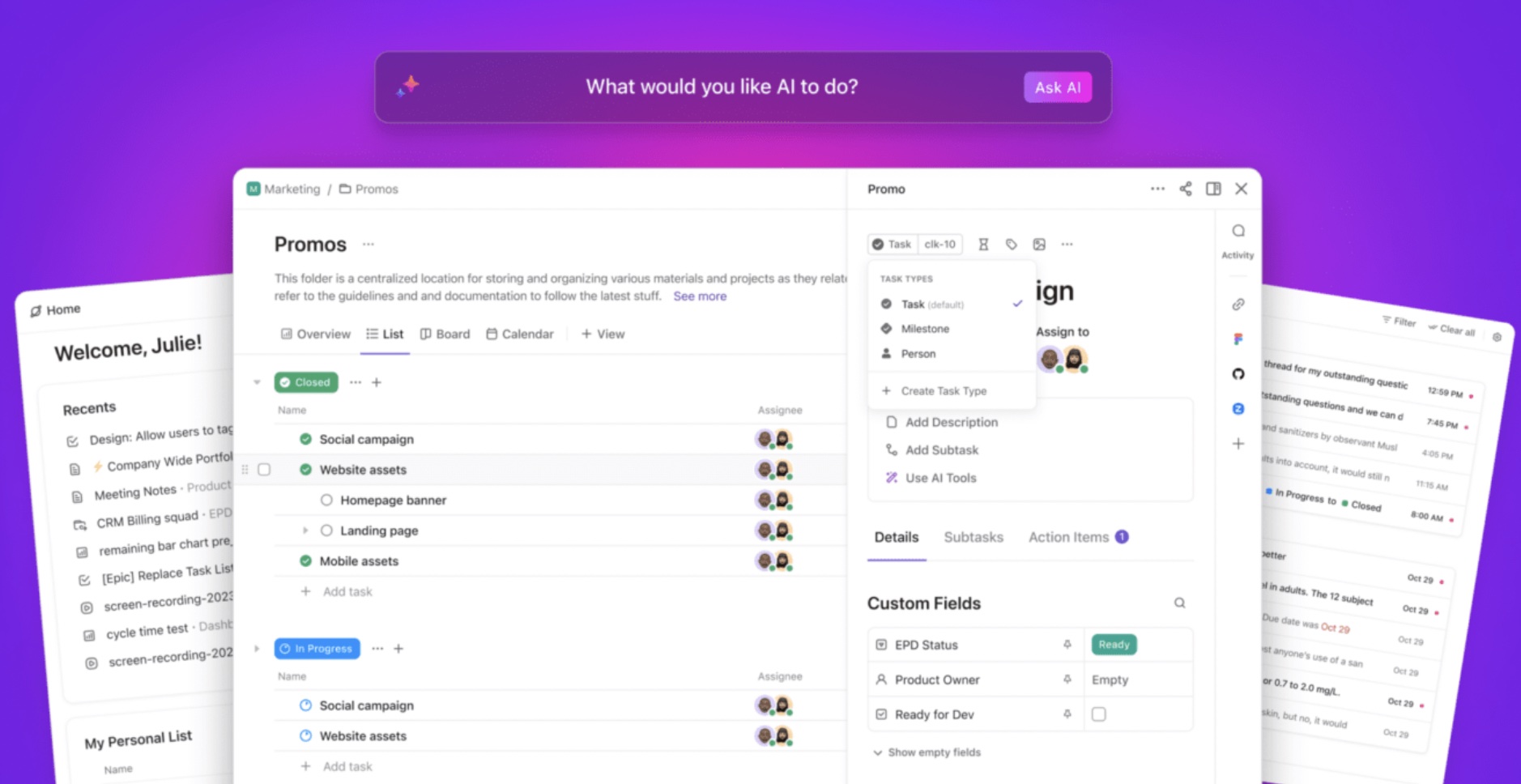
ClickUp has already established itself as a powerful player—but its founders, Zeb Evans and Alex Yurkowski, are dreaming even bigger.
Their vision is not just to create another productivity tool but to transform how work gets done on a global scale. With bold plans for the future, ClickUp is setting its sights on becoming the operating system of work, consolidating countless tools and functions into one seamless platform.
The AI-Powered Future of Work
As businesses continue to adapt to a rapidly changing environment, ClickUp’s future lies in its ability to integrate cutting-edge technology into everyday workflows. AI-powered automation is at the forefront of this transformation.
ClickUp is already rolling out AI-driven tools that will not only streamline processes but also provide valuable insights to help teams work smarter.
Imagine a workday where your tool doesn’t just help you manage tasks but also predicts the next steps, automates tedious processes, and even provides insights on team performance. This vision is becoming a reality with ClickUp’s AI-driven approach, which will only expand in the years to come.
The Road to Becoming the Operating System of Work
For ClickUp, the goal is not just to be one of the best productivity tools on the market but to become the single, unified solution for every aspect of work.
No longer will teams need to toggle between multiple apps for project management, document sharing, communication, and performance tracking.
ClickUp aims to replace them all, creating one platform where everything from task management to analytics and team collaboration happens in a unified environment.
Key Takeaway: ClickUp is setting itself up to become the operating system of work, making it the ultimate destination for all things productivity. The company’s future looks bright, with a focus on innovation and adaptability, ensuring its place at the forefront of the future of work.
Sources:
- https://foundr.com/articles/leadership/personal-growth/zeb-evans
- https://www.youtube.com/watch?v=oD0bD0yovsc
- https://www.youtube.com/watch?v=UdTzH35qGgA
- https://kareemazees.com/clickup-growth-strategy-scaling-to-20m-arr/?utm_source=chatgpt.com
- https://www.youtube.com/watch?v=UdTzH35qGgA
- https://www.youtube.com/watch?v=GfK1j_7mrGQ
- https://clickup.com/press/100-million-series-b
- https://diginomica.com/one-app-replace-them-all-clickups-ceo-future-productivity-and-how-clickup-addresses-proliferation
- https://productschool.com/resources/product-podcast/zeb-evans-productivity-apps
- https://diginomica.com/clickup-viral-strategy-manage-work-enterprise
- ClickUp Blog – AI Powered Tools
- ClickUp Blog – Digital Transformation
- TechCrunch – ClickUp’s Series C Funding
- TechRepublic – Asana vs ClickUp
- Zapier Blog – ClickUp Growth
- ClickUp Raises $400 Million At $4 Billion Valuation As Competition Heats Up In Productivity Software
Recent Articles
How 1Mind Achieved Rapid Revenue Growth with AI-Powered Sales Solutions
In the ever-evolving world of technology, few companies have managed to disrupt traditional sales and marketing processes as effectively as…
How Rev's CEO Adi Bathla Drove Revenue to $10M by Revolutionizing Auto Shop Workflows
Building a company from scratch and driving it to hit significant revenue milestones is no small feat. Adi Bathla, the…
How Practice by Numbers Achieved $16.5M Revenue in 2026 with Innovative SaaS Solutions
2015: Launched Practice by Numbers to Fill a Market Gap Practice by Numbers (PBN), co-founded by Rohit Garg and Dr.…